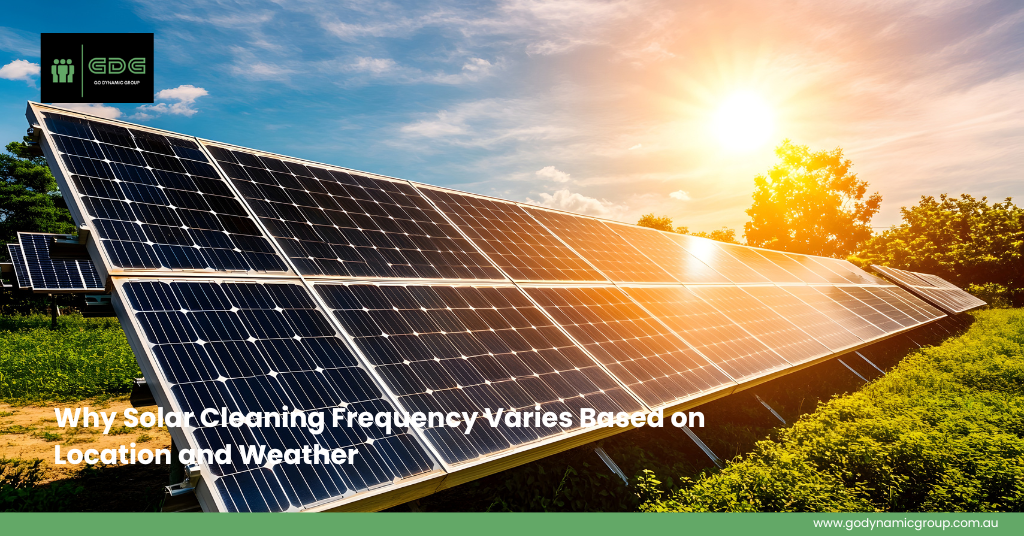
If you’ve invested in solar panels, you already know the importance of keeping them in top condition to maximise efficiency. But how often do solar panels need to be cleaned? The answer isn’t one-size-fits-all. The frequency largely depends on where you live and the weather conditions your panels are exposed to.
In this guide, we’ll break down how different climates and environments affect cleaning schedules, why maintenance is crucial, and how professional solar panel cleaning services—like those offered by Go Dynamic Group—help protect your investment year-round.
Why Solar Panel Cleaning Frequency Matters
Over time, dust, dirt, bird droppings, and other debris accumulate on solar panels, creating a barrier between sunlight and the photovoltaic cells. This buildup can reduce energy output by up to 20–30%, depending on how severe it is.
So, should you clean your solar panels? Absolutely. Regular cleaning restores performance, improves longevity, and ensures you get the maximum return on your solar investment.
Environmental Factors That Affect Cleaning Frequency
a. Urban Areas
If your property is in a busy urban area, pollution, dust, and exhaust particles from vehicles can quickly settle on your solar panels. You might need to clean your panels every 3–4 months to maintain efficiency.
b. Coastal Locations
Homes near the coast experience salt spray and high humidity, which can lead to corrosion and mineral deposits on panels. It’s best to schedule cleaning at least quarterly to prevent buildup and salt damage.
c. Rural or Agricultural Areas
Farms and open rural areas often experience more pollen, dust, and dirt from machinery and unpaved roads. Panels here may require cleaning every 2–3 months, especially during dry seasons when dust levels rise.
d. Industrial Zones
If your property is near factories or heavy industries, soot and pollutants can coat solar panels faster than normal. Regular inspections and bi-monthly cleaning can prevent performance drops.
e. Suburban Homes
In quieter suburban areas with moderate air quality and little dust, cleaning every 6 months might be sufficient. However, seasonal factors like autumn leaves or spring pollen can still require spot cleaning.
How Weather Conditions Impact Cleaning Needs
Rainfall
Many assume rain naturally cleans solar panels—but it doesn’t always do the job. Rainwater can leave mineral spots and grime streaks, especially in hard-water regions. After long rainy periods, panels should be checked and cleaned if needed.
Dry and Dusty Climates
In areas with little rain, dust accumulation is more pronounced. Frequent dry seasons may call for cleaning every 1–2 months to maintain optimal efficiency.
Storm-Prone Regions
Storms can deposit leaves, mud, and debris on panels. After major weather events, an inspection and post-storm cleaning are essential to prevent shading and damage.
Snowy Conditions
Snow can block sunlight and reduce performance. While snow often slides off tilted panels, residual slush and dirt can remain, making a post-winter cleaning important for restoring output.
Signs It’s Time to Clean Your Solar Panels
Not sure when to schedule your next cleaning? Watch out for these signs:
- Noticeable drop in energy output or higher electricity bills
- Visible dirt or bird droppings on panels
- Nearby construction or storms that may have caused debris buildup
- It’s been 6 months or more since your last professional clean
DIY vs. Professional Solar Panel Cleaning
While it’s possible to rinse off panels yourself, professional cleaning offers safer and more thorough results.
Here’s why it’s worth it:
- Safety: Professionals use proper tools and safety equipment, especially for roof-mounted panels.
- Quality Results: Streak-free, residue-free cleaning solutions prevent damage and preserve coating.
- Inspections: Many cleaning services also visually inspect for cracks or wear during cleaning.
- Efficiency: Regular servicing ensures consistent power generation and long-term savings.
If you’re wondering “should you wash your solar panels yourself?”, the answer depends on accessibility and equipment. For most property owners, hiring a solar panel cleaning service is the safest and most effective choice.
Recommended Cleaning Schedule (Based on Australian Conditions)
| Environment Type | Suggested Cleaning Frequency |
| Coastal | Every 3 months |
| Rural / Agricultural | Every 2–3 months |
| Industrial | Every 2 months |
| Urban | Every 3–4 months |
| Suburban | Every 6 months |
Keep in mind that this schedule can vary depending on local weather events, construction activity, and nearby trees.
How Go Dynamic Group Can Help
At Go Dynamic Group, we provide professional solar panel cleaning services across Australia, helping homeowners and businesses maintain peak system performance. Our team uses safe, eco-friendly methods designed to remove grime without damaging your panels.
With regular cleaning, you’ll:
- Boost solar efficiency and lifespan
- Prevent costly maintenance issues
- Protect your investment against environmental wear
Learn more about our services or book your next clean today.
Conclusion
So, how often should you get your solar panels cleaned? It depends on your location, environment, and weather patterns. Regular cleaning not only boosts efficiency but also extends the lifespan of your panels—ensuring your solar system keeps performing at its best year after year.
If you’re unsure of the right cleaning schedule for your property, the experts at Go Dynamic Group can assess your site and recommend a maintenance plan tailored to your local conditions.